




When you slip into a pair of jeans, you might not think about the thousands of liters of water that went into making them look perfectly worn. Traditional denim washing—stone washing, enzyme washing, and bleaching—is notoriously water-intensive. But a revolution in garment finishing is changing that. By combining laser fading and ozone washing, modern denim manufacturers can slash water consumption by up to 70% compared to conventional methods. In this article, you’ll learn exactly how these technologies work, why they’re a game-changer for the planet, and how you can identify jeans made with these sustainable processes.
Conventional denim finishing relies on multiple wet cycles: stone washing uses pumice stones and large volumes of water to abrade the fabric; enzyme baths break down indigo for a softer hand; and bleach or permanganate sprays create contrast. Each step requires rinsing, and the wastewater is often laden with chemicals and stone residue. According to a study published in Tekstilec, a single pair of traditionally finished jeans can consume up to 70 litres of water just in the washing stage. Multiply that by billions of jeans produced annually, and the environmental toll is staggering.
Laser technology uses a high-powered beam to remove or alter the indigo dye on denim fabric. By controlling the intensity, speed, and pattern of the laser, manufacturers can create precise whiskering, fraying, and worn effects without any water. The laser vaporizes the dye, leaving a clean, repeatable design. This method eliminates the need for manual sanding, chemical sprays, and multiple wash cycles.
Ozone (O₃) is a powerful oxidizing agent. In a closed chamber, ozone gas is infused with moisture and circulated through the garments. The ozone reacts with the indigo molecules, bleaching them to give denim a faded or vintage look. Because ozone is generated on-site and decomposes back into oxygen after use, the process requires very little water—just enough to create humidity. An ozone wash can replace several conventional wet cycles.
When laser and ozone are used together, the water reduction is dramatic. Laser handling the dry abrasion and ozone providing the oxidative fading mean that most of the finishing is done without water. The only water needed is for a final rinse to remove any residual dust or loose dye. Research published in Current Opinion in Green and Sustainable Chemistry confirms that such integrated digital finishing can cut water use by 50–70% compared to conventional methods, while also reducing energy and chemical usage.
So where does the 70% figure come from? Industry life-cycle assessments show that a typical stone-wash cycle uses 30–60 litres of water per pair. With laser and ozone, that drops to 5–15 litres for the final rinse. Moreover, because laser and ozone are precise, less re-processing is needed if a pattern isn’t perfect, saving even more water. A systematic review in Sustainability (MDPI) highlights that digital technologies like laser and ozone are among the most effective interventions for reducing the water footprint of denim production.
Cutting water use is just the start. Laser and ozone also reduce:
While the initial equipment cost is high, the long-term savings in water and chemicals make it a win for both planet and manufacturers.
One common worry is that digital finishing might produce a less authentic look than traditional methods. In reality, laser and ozone can achieve an equal—if not better—range of finishes. Lasers can mimic whiskering, scratches, and even three-dimensional wear with high consistency. Ozone gives a uniform fade that doesn’t leave the harsh contrasts typical of chemical bleaching. And because the process is repeatable, each pair looks exactly as intended, reducing waste from rejects.
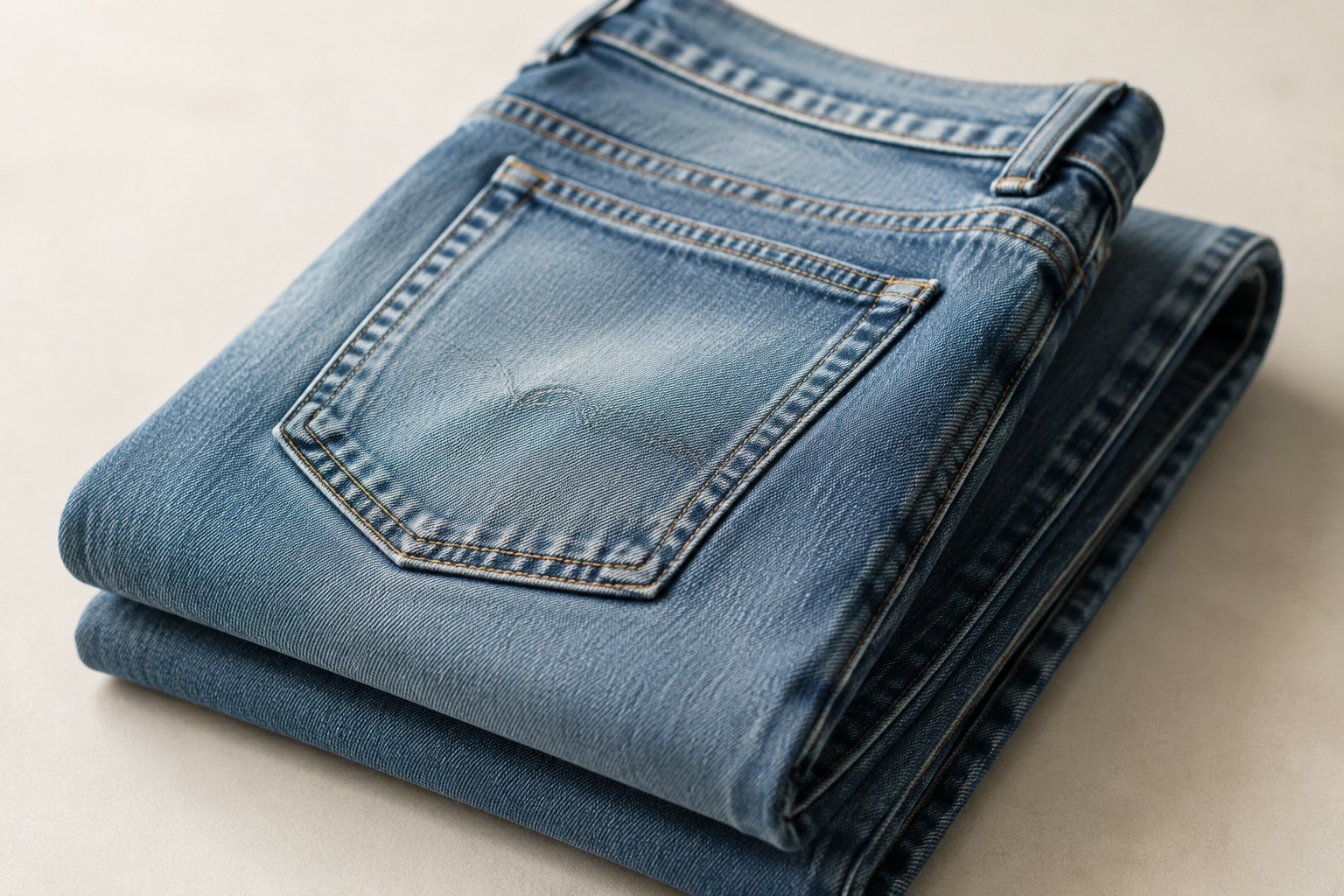
As a conscious shopper, you can make a difference. Here’s how to support water-saving denim:
Navigating green claims can be tricky. Avoid these pitfalls:
Laser and ozone wash technology represents a massive step forward for denim sustainability. By cutting water use by up to 70%, these innovations prove that style and environmental responsibility can go hand in hand. Key takeaways:
Next time you’re denim shopping, look beyond the wash—look for the laser and ozone story. It’s a choice that feels as good as it fits.
Laser fading uses a concentrated beam of light to remove indigo dye from denim in precise patterns, creating whiskers, scratches, and worn effects without water. Ozone washing uses ozone gas (O3) in a humid chamber to oxidize and bleach the dye, producing a uniform fade with minimal water. They are often used together for maximum water savings.
Industry studies and life-cycle assessments indicate that combining laser and ozone can reduce water consumption in denim finishing by 50 to 70 percent compared to traditional methods like stone washing or chemical bleaching. The exact savings depend on the specific finish and the base fabric.
No. Laser and ozone treatments affect only the surface dye and do not compromise the fabric’s tensile strength or durability. In fact, because they avoid harsh mechanical abrasion (like pumice stones), the denim may retain its structural integrity better, lasting longer if cared for properly.
Look for product descriptions that mention ‘laser fading,’ ‘ozone wash,’ ‘digital finishing,’ or ‘waterless denim.’ Some brands also include certifications such as Oeko-Tex or Bluesign, which often require water-efficient processes. You can check our How to Spot Truly Sustainable Jeans in 2026 guide for more clues.
