



Denim is a wardrobe staple, but its environmental footprint has long been a cause for concern. Traditional denim finishing processes, particularly stone washing and chemical treatments, consume vast amounts of water—often over 50 liters per pair of jeans—and generate polluted wastewater. In a world where water scarcity affects billions, the fashion industry is under pressure to innovate. Enter laser and ozone technologies: two groundbreaking methods that are slashing water usage by up to 90% while delivering the same worn-in looks consumers love. This article explores how these technologies work, why they matter for eco-conscious shoppers, and how they are reshaping the future of sustainable denim. By the end, you’ll understand exactly how your choice of jeans can make a tangible difference for the planet.
To appreciate the revolution, we must first understand the problem. Conventional denim finishing relies heavily on water-intensive techniques. Stone washing, for instance, involves tumbling jeans with pumice stones in large industrial washing machines to soften the fabric and create a faded appearance. This process can use up to 100 liters of water per garment, according to industry estimates. Additionally, the abrasion from stones damages fibers, shortening the life of the jeans and generating microplastic pollution when synthetic blends are involved. Chemical bleaching and sandblasting further compound the issue, introducing hazardous substances into waterways and endangering workers’ health.
The environmental toll extends beyond water volume. The wastewater from denim laundries often contains dyes, heavy metals, and toxic chemicals, which, if untreated, contaminate rivers and harm aquatic ecosystems. In major denim-producing regions like China, Bangladesh, and India, this pollution has severe public health consequences. Recognizing these challenges, brands and manufacturers have sought cleaner alternatives. Laser and ozone technologies emerged as game-changers, offering precise, water-free, and chemical-free ways to achieve the same aesthetic effects. As noted by experts, sustainability in denim can involve everything from water use and carbon emissions to labor practices and supply chain transparency (experts say sustainability in denim can involve everything from water use and carbon emissions to labor practices and supply chain transparency).
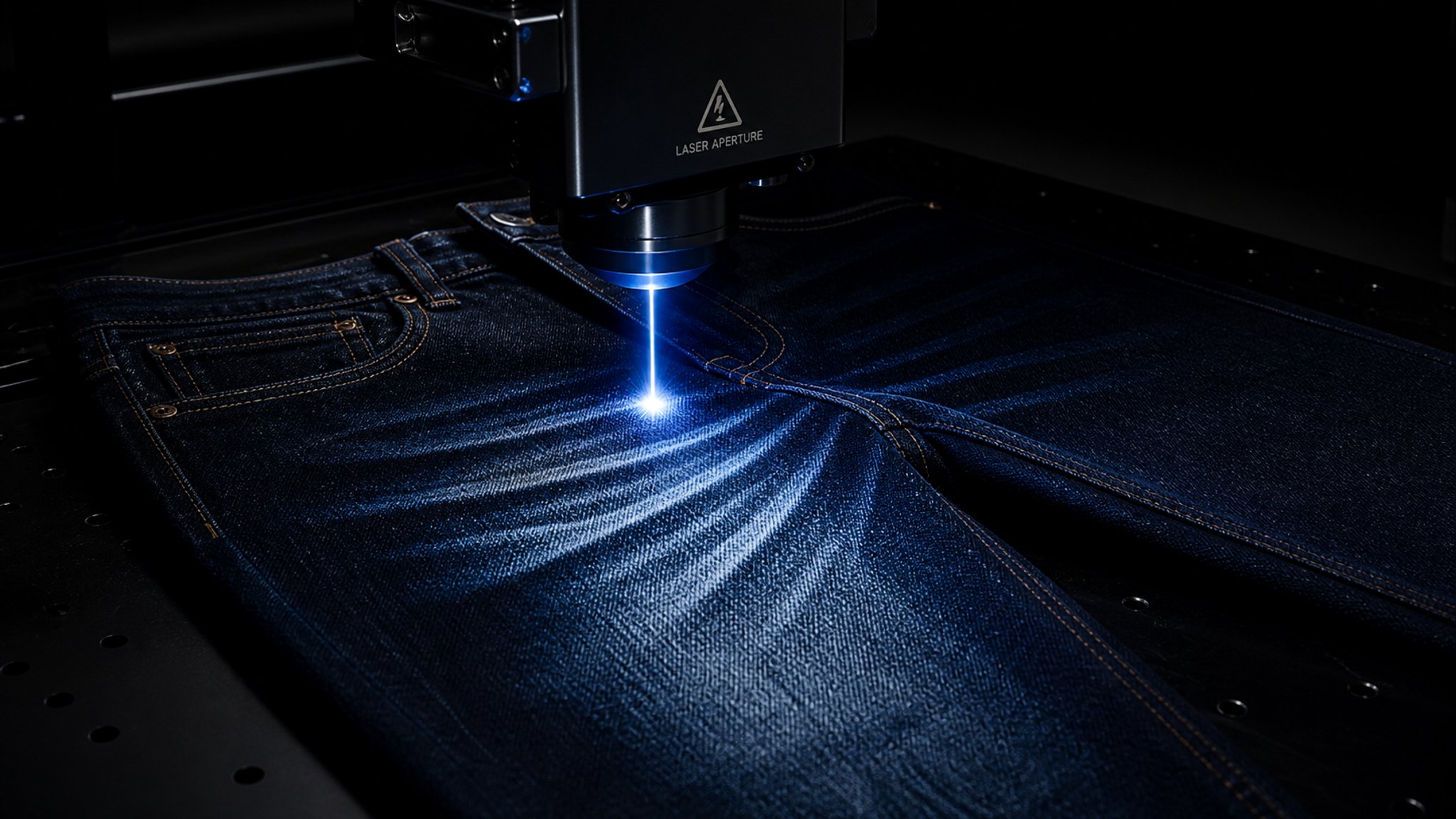
Laser technology in denim finishing uses high-energy beams to etch patterns, create whiskering, and fade indigo dye directly from the fabric’s surface. It’s a dry process that eliminates the need for water, stones, and chemicals. The laser’s precision allows designers to replicate complex wear patterns with remarkable accuracy, reducing material waste and ensuring consistency across production runs. Ozone technology, on the other hand, employs ozone gas—a powerful oxidizing agent—to bleach denim and give it a vintage look. When dissolved in water or applied as a gas, ozone breaks down indigo dye molecules without leaving harmful residues. It then reverts to oxygen, leaving no toxic byproducts.
Both methods represent a paradigm shift from wet processing to dry or low-water finishing. They not only conserve water but also reduce energy consumption, as the need for heating large volumes of water and drying garments is minimized. For eco-friendly denim brands, adopting these technologies is a cornerstone of sustainable production. If you’re new to the concept, our guide on Eco-Friendly Jeans Buying Guide: Laser & Ozone Washes Explained breaks down the basics in more detail.
The core promise of laser and ozone finishing is a dramatic reduction in water consumption. Traditional denim finishing can use 50–100 liters of water per jean, but laser and ozone processes cut that figure by up to 90%, often requiring less than 10 liters per garment. This section dives into the mechanics and quantifies the savings.
Laser machines operate by directing a focused beam of light onto the denim surface. The laser’s energy vaporizes the indigo dye, creating faded patterns instantly. Because it’s a dry process, no water is needed for the fading itself. Compared to stone washing, which requires multiple rinse cycles to remove pumice dust and loose dye, laser finishing eliminates those steps entirely. A single pair of jeans processed with lasers can save up to 50 liters of water, based on industry data. Moreover, the precision reduces fabric damage, extending the garment’s lifespan—a key principle of sustainable fashion. For a deeper dive into the comparison, see our article on How Laser Fading in Jeans Saves Water vs. Stone Washing.
Ozone washing replaces traditional bleach with ozone gas. In a sealed chamber, ozone is bubbled through water or applied directly to dry denim. The ozone oxidizes the indigo, lightening the fabric to the desired shade. The process can be done with minimal water—often just enough to dampen the fabric—and the water can be recycled repeatedly because it remains free of harsh chemicals. After treatment, the ozone decomposes into oxygen, leaving no environmental footprint. This method reduces water usage by 60–80% compared to conventional bleaching, and when combined with laser fading, the total water savings can reach 90% or more. The absence of chemical effluents also means cleaner wastewater, aligning with stricter environmental regulations.
Beyond individual savings, the cumulative effect is staggering. A denim factory producing 100,000 jeans per month using conventional methods might consume 5–10 million liters of water. Switching to laser and ozone could reduce that to under 1 million liters—a saving of over 4 million liters monthly. These technologies are not just niche experiments; they are being adopted by major manufacturers worldwide. As the demand for sustainable fashion grows, scaling up laser and ozone systems becomes economically viable. Shoppers can support this shift by choosing jeans made with these methods. Our selection of eco-friendly jeans features styles crafted with these water-saving technologies.
As a conscious consumer, you can drive change by demanding transparency and supporting brands that prioritize water conservation. Here are actionable steps to identify truly sustainable denim:
Navigating the world of sustainable denim can be tricky. Avoid these pitfalls to make truly informed choices:
Laser and ozone technologies are revolutionizing denim production by cutting water waste by up to 90%. These innovations replace water-guzzling stone washing and chemical bleaching with precise, dry processes that deliver high-quality finishes without harming the environment. By choosing jeans made with these methods, consumers can significantly reduce their fashion footprint. Remember: look for explicit mentions of laser or ozone finishing, support transparent brands, and care for your denim responsibly. The future of fashion is not just about looking good—it’s about doing good for the planet. Embrace the change, one pair of jeans at a time.
Laser technology uses a dry beam to fade and pattern denim, eliminating the need for water-intensive stone washing and multiple rinse cycles. Ozone technology bleaches denim using gas or minimal water with ozone, which decomposes into oxygen, leaving no toxic waste. Together, they can reduce water consumption by up to 90% compared to traditional methods.
Yes, often more so. Laser and ozone processes are gentler on the fabric because they avoid the abrasive wear of pumice stones and harsh chemicals. This results in less fiber damage and a longer-lasting garment.
No, these technologies can replicate virtually any traditional finish, from subtle fades to heavily distressed looks, with high precision. The hand feel can be softer because the fabric isn’t beaten by stones. Many consumers find the results indistinguishable from or superior to conventional methods.
Look for detailed product descriptions that mention ‘laser finishing’ or ‘ozone wash.’ Reputable brands often share behind-the-scenes content or hold certifications like OEKO-TEX or GOTS. You can also check independent sustainability reports or reviews. If in doubt, contact the brand directly for verification.
