



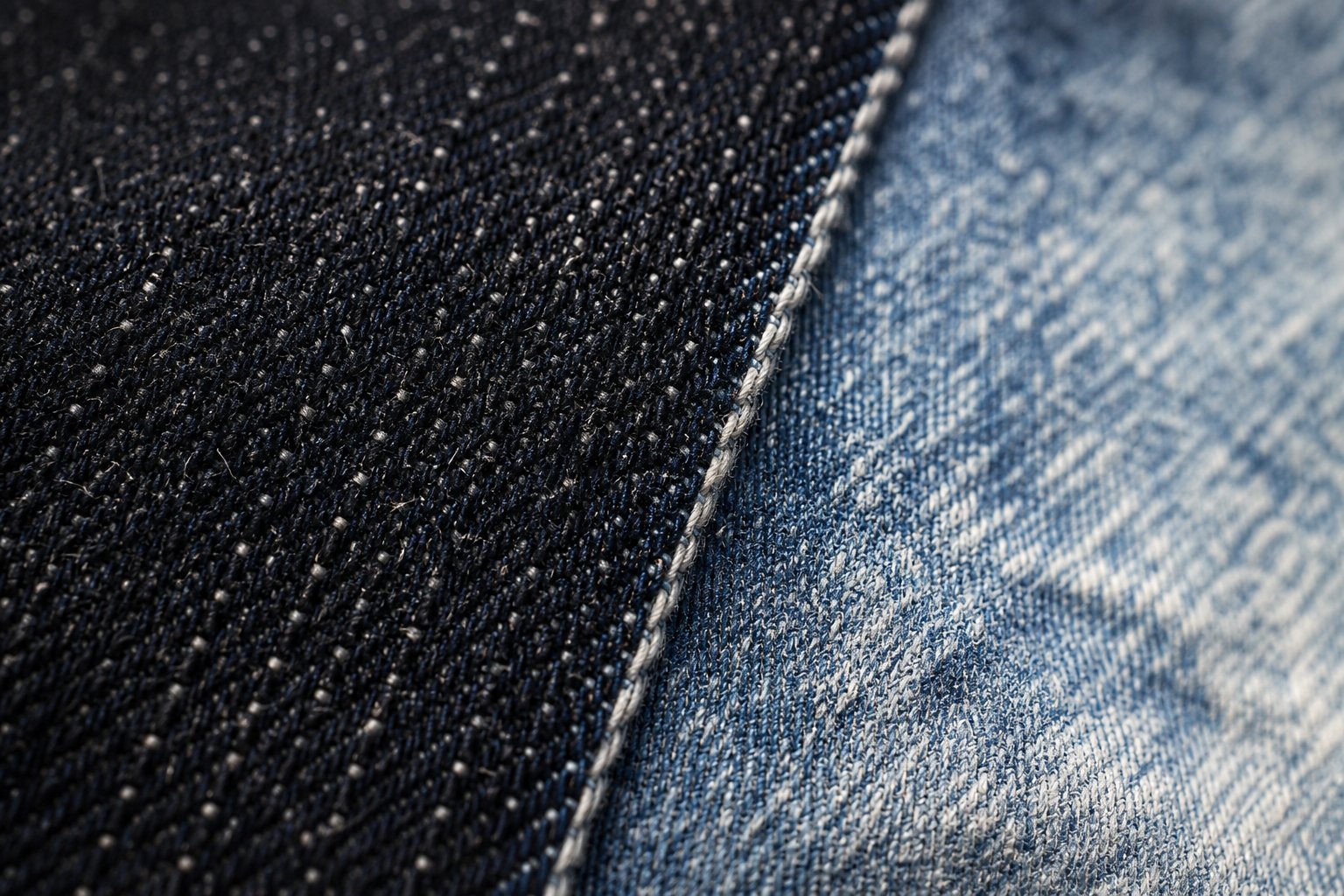
Choosing between raw denim and washed denim can feel like picking between a blank canvas and a finished painting. Raw denim promises a personalized fade journey over months of wear, while washed denim offers immediate comfort and a broken-in look. But the decision goes beyond aesthetics — it touches on sustainability, care routines, and how long your jeans will last. This guide explains the key differences, so you can confidently pick the style that suits your lifestyle and values.
Raw denim, also called dry denim, is denim that has not been washed after dyeing. The fabric retains its original indigo dye and starch, resulting in a stiff, dark blue pair of jeans that will gradually fade according to your unique movements. As leading fabric guides explain, denim is a cotton twill with a diagonal ribbing; raw denim preserves the full indigo coating, which means it will crease and fade where you sit, bend, and walk.
Washed denim has undergone a wet process — usually a rinse with water, enzymes, or stones — to soften the fabric and remove some indigo. This creates a uniform, lived-in appearance from day one. Traditional stone-washing uses pumice stones, but modern sustainable methods like laser and ozone washing achieve similar results with far less water and chemicals. According to AP News coverage on sustainable denim, the wet process traditionally involves significant water use, but innovations are cutting that dramatically.
Raw denim arrives stiff, dark, and uniform. The fabric has a crisp hand feel and a deep blue color that will lighten over months of wear. Washed denim, in contrast, is soft, slightly faded, and may have whiskering or marbling effects already applied. The choice here is personal: do you want to break in your jeans yourself (raw) or enjoy instant comfort (washed)?
Weight also matters. Fabric experts note that weight (in ounces) doesn’t tell the whole story — yarn count, weave, and finish matter. Raw denim often comes in heavier weights (14 oz and up), while washed denim can be lighter because the washing process relaxes the fibers.
Raw denim fans love that each pair develops unique “fades” — honeycombs behind the knees, whiskers at the hips, and phone outlines in pockets. These marks take 6–12 months of consistent wear to show. Washed denim fades much less over time because much of the indigo is already removed. If you want a pair that tells your story, raw denim is the answer. If you prefer a consistent color that won’t change much, go with washed.
In terms of durability, raw denim starts stronger because the fibers haven’t been weakened by washing. However, both types can last many years if cared for properly. For tips, see our Sustainable Denim Wash Guide.
Raw denim skips the wet processing entirely, so it uses less water and fewer chemicals upfront. However, you need to wear it for many months before washing, and the initial starch may require an extra hot wash later. Washed denim, especially when produced with ozone and laser technology, can also be very sustainable — these methods can reduce water usage by up to 90% compared to traditional washing. For a deeper dive, read our Sustainable Denim Buying Guide for 2026.
The choice depends on the brand’s production methods. Some washed jeans use harmful chemicals and excessive water, while others use closed-loop systems. Always check for certifications or transparent reporting — see How to Spot Greenwashing in New Denim Drops.
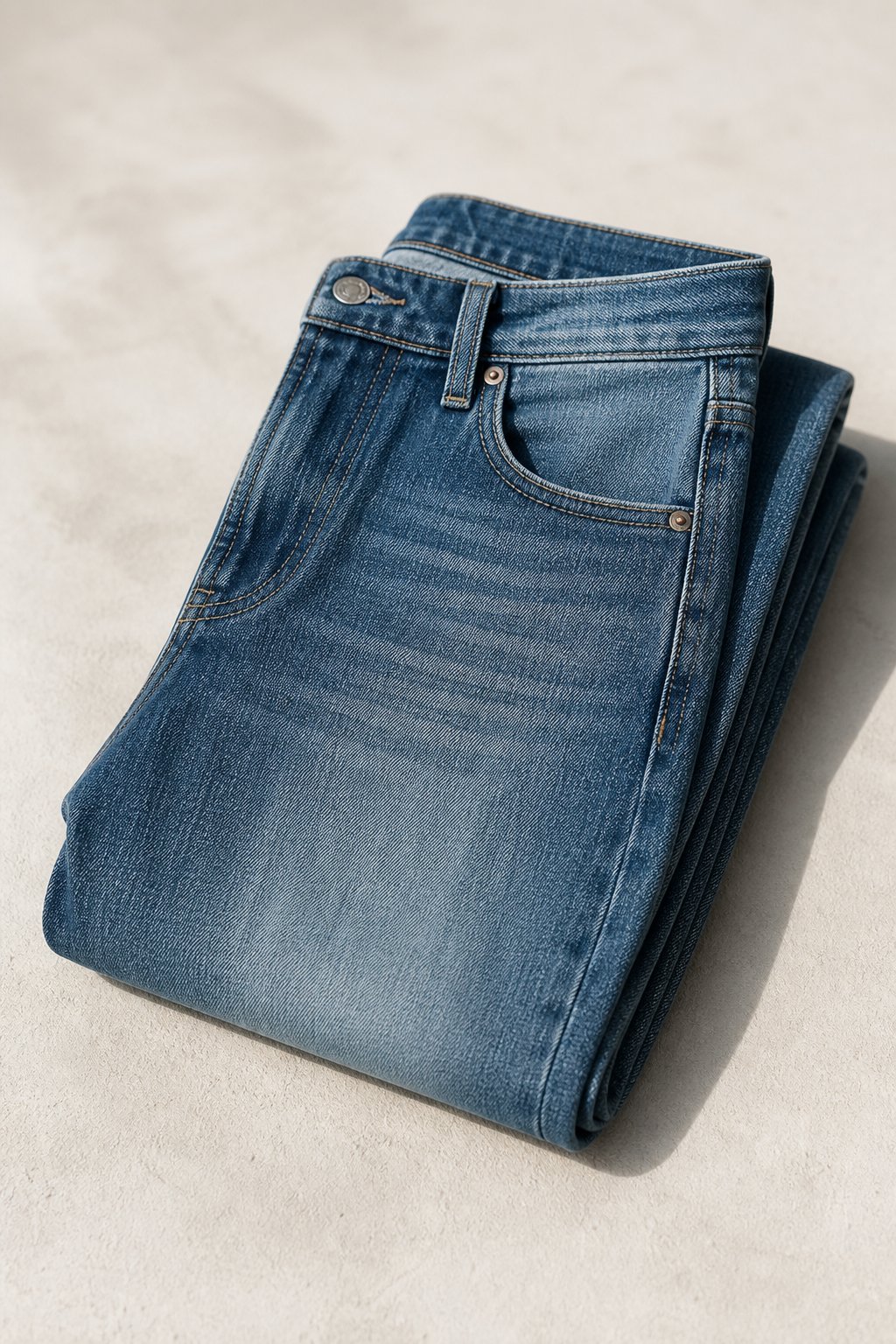
Raw denim offers a personalized journey, deep color, and minimal initial water use, but requires patience. Washed denim delivers instant comfort and consistent style, with modern sustainable options that rival raw denim’s eco-credentials. The “better” choice depends on your priorities: customization vs. convenience, fade potential vs. immediate wearability. Whichever you pick, look for transparent production practices and care for your jeans well — they’ll reward you with years of loyal service. For more fit advice, see our Complete Fit Guide.
Raw denim typically uses less water and chemicals upfront because it skips the wet finishing process. However, modern washed denim produced with laser and ozone technology can be equally sustainable. The key is to check the brand’s production methods.
Noticeable fades usually appear after 3–6 months of regular wear, with more dramatic contrast developing after 12 months or longer. The timeline depends on how active you are and how often you wash (less washing yields higher contrast).
It’s best to wash raw denim infrequently — every 6–12 months — to preserve fades. When you do wash, turn them inside out, use cold water, and air dry. Avoid harsh detergents.
Washed denim fades very slowly because most of the loose indigo has already been removed during production. The color stays relatively consistent, but slight fading may occur with many washes.
