



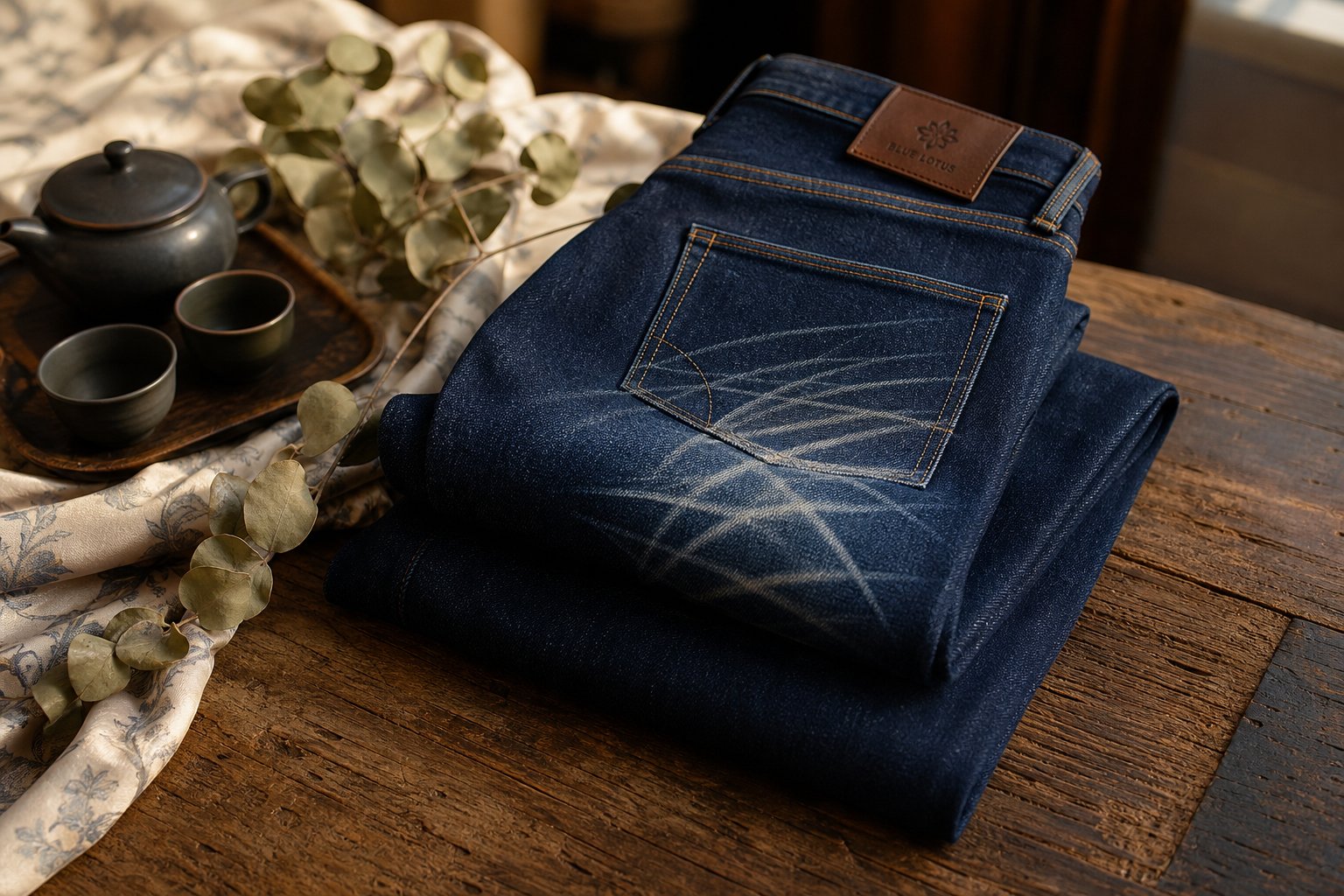
Denim production has historically been one of the most water-intensive industries in fashion. Traditional washing and finishing processes can consume up to 100 litres of water per pair of jeans, much of it used to create the worn-in looks that consumers love. But a revolution is underway. Laser finishing technology is transforming the way denim is finished, cutting water use to near zero for certain steps while delivering precision effects that older methods simply cannot match. In this article, you will learn exactly how laser finishing works, how it saves water compared to conventional techniques, and what this means for the future of sustainable denim.
Whether you are an eco-conscious shopper or simply curious about the technology behind your favourite jeans, understanding laser finishing helps you make more informed choices. As part of our commitment to transparency, our sustainable jeans buying guide dives deeper into what to look for when selecting genuinely eco-friendly denim.
Laser finishing uses a focused beam of light to remove indigo dye from denim fabric in precise patterns. A computer-controlled laser head moves across the garment, burning away dye to create whiskers, scratches, fading, and other distressed effects. Unlike manual sandblasting or stone washing, laser finishing is dry – it requires no water, no pumice stones, and no harsh chemical bleaches.
According to a critical review on sustainability in denim published in PMC, laser technology not only saves water but also reduces chemical usage and speeds up the dyeing process by 40%, while cutting energy consumption by 60%. This makes it a cornerstone of modern sustainable denim production.
Traditional methods rely heavily on water and chemicals. For example, achieving a faded look typically involves washing jeans for 30–60 minutes in large industrial machines with pumice stones, enzymes, or chlorine bleach. Each cycle uses thousands of litres of water, which then must be treated before release. In contrast, a laser finishing machine can treat a pair of jeans in under one minute without a single drop of water. The only waste is the dye residue, which is captured by filtration systems.
As highlighted by a guide to best sustainable denim brands 2026, some laser systems like the Atmos process use up to 95% less water than traditional laundry methods. This dramatic reduction positions laser finishing as a key technology for eco-friendly denim manufacturing.
The laser literally burns away the top layer of indigo, creating contrast without the need for wet processing. Because the laser operates with pinpoint accuracy, manufacturers can replicate complicated designs – such as whiskers around the crotch or scratches on the thigh – that would otherwise require multiple wet washes. Each avoided wet wash cycle saves tens of litres of water.
Beyond water savings, laser finishing eliminates the use of potassium permanganate or chlorine, both of which are harmful to aquatic ecosystems. The innovative study on sustainable denim aesthetics through ozone and laser technologies notes that ozone washing also reduces water consumption by up to 80% while removing harsh chemicals. When combined, laser and ozone create a nearly waterless finishing system.
To appreciate the scale of savings, consider this: a conventional stone-washed pair of jeans may require several wet processes – desizing, bleaching, enzyme washing, softening, and rinsing – each using fresh water. Total consumption can exceed 60 litres per pair. In contrast, a laser-finished pair may only need a single short rinse (if any) to remove laser residue, cutting water use by 90% or more.
Many forward-thinking brands now rely on laser as the primary finishing method. By integrating laser with ozone gas washing, they further reduce the need for water and energy. Our article on how laser and ozone washing cuts water waste in denim provides a detailed breakdown of how these technologies complement each other.
Ozone washing is a gas-phase bleaching method that uses ozone (O₃) to oxidise indigo. No water is required for the bleaching step itself, though a quick rinse may be used afterward. Together with laser, manufacturers can achieve any faded or vintage look without traditional water baths. According to the Environmental Standards documentation from Outland Denim’s environmental page, using certified safe chemicals and natural indigo dyes alongside these technologies eliminates harmful runoff.
For consumers, this means that jeans finished with laser and ozone are not only lower-impact but often safer to wear, because no toxic chemical residues remain on the fabric. Our sustainable denim wash guide explains how these finishes affect the look and care of your jeans.
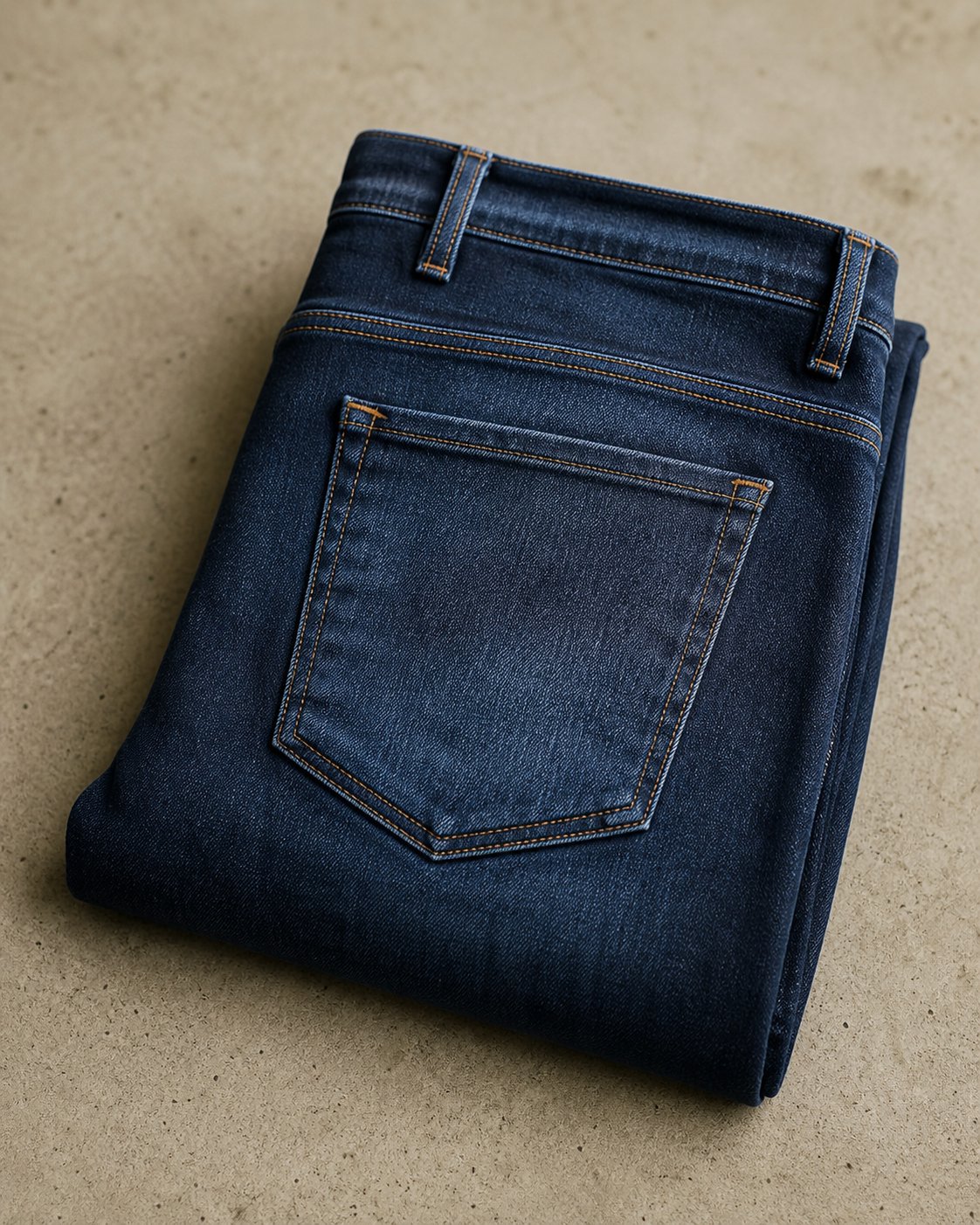
Laser finishing is one of the most impactful water-saving innovations in the denim industry. By using targeted laser light to remove indigo instead of water, chemicals, and mechanical abrasion, brands can cut up to 95% of the water used in traditional finishing. When combined with ozone gas washing, the process becomes nearly waterless while still delivering the aesthetic consumers expect.
For shoppers, choosing laser-finished denim is a tangible way to reduce your fashion footprint. Look for brands that are transparent about their finishing methods and committed to sustainable production. By supporting these technologies, you help drive the industry toward a future where jeans don’t cost the planet.
No, laser finishing only removes the top layer of indigo dye, leaving the fabric structure intact. When done correctly, it does not weaken the fibres any more than traditional abrasion methods.
Laser finishing can reduce water usage by 90% or more per pair of jeans, because the process itself is completely dry. Any remaining water use comes from optional rinsing steps, which are much shorter and fewer.
Yes, modern laser systems are extremely versatile. They can create whiskers, scratches, fading, rips, and even custom logos with high precision. Designers can program virtually any pattern into the software.
The technology can initially be more costly for manufacturers, but as adoption grows and efficiency improves, prices are becoming comparable to conventionally finished denim. Many sustainable brands offer laser-finished jeans at competitive price points.
