



Denim is one of the most beloved fabrics on the planet, but its production has long carried a heavy environmental price tag. Traditional denim washing—the process that gives jeans their faded, worn-in look—can consume enormous volumes of water and rely on harsh chemicals that pollute waterways and harm workers. If you care about sustainable fashion, understanding how your jeans are finished is just as important as the cotton they’re made from. This article explains how laser and ozone denim washing technologies are transforming the industry by dramatically reducing water and chemical use, while still delivering the authentic finishes consumers love. You’ll learn the science behind these innovations, practical tips for choosing truly eco-friendly denim, and common pitfalls to avoid.
Denim washing is the finishing process that softens fabric, removes excess indigo dye, and creates faded or distressed effects. Conventional methods often involve multiple cycles of stone washing, enzyme washing, or acid washing, each requiring large vats of water and chemical additives. According to industry research, traditional denim finishing can use up to 70 liters of water per pair of jeans just for washing and finishing alone. This doesn’t include the water needed to grow cotton or dye the fabric. The environmental impact is staggering when you consider that billions of jeans are produced annually.
Beyond water consumption, conventional washing generates toxic wastewater containing dyes, bleaches, and synthetic abrasives. In many manufacturing regions, this effluent is discharged untreated into rivers, damaging ecosystems and communities. A critical review on sustainability in denim notes that chemical-intensive finishing is one of the most polluting stages of denim production, contributing to water scarcity and chemical contamination worldwide.
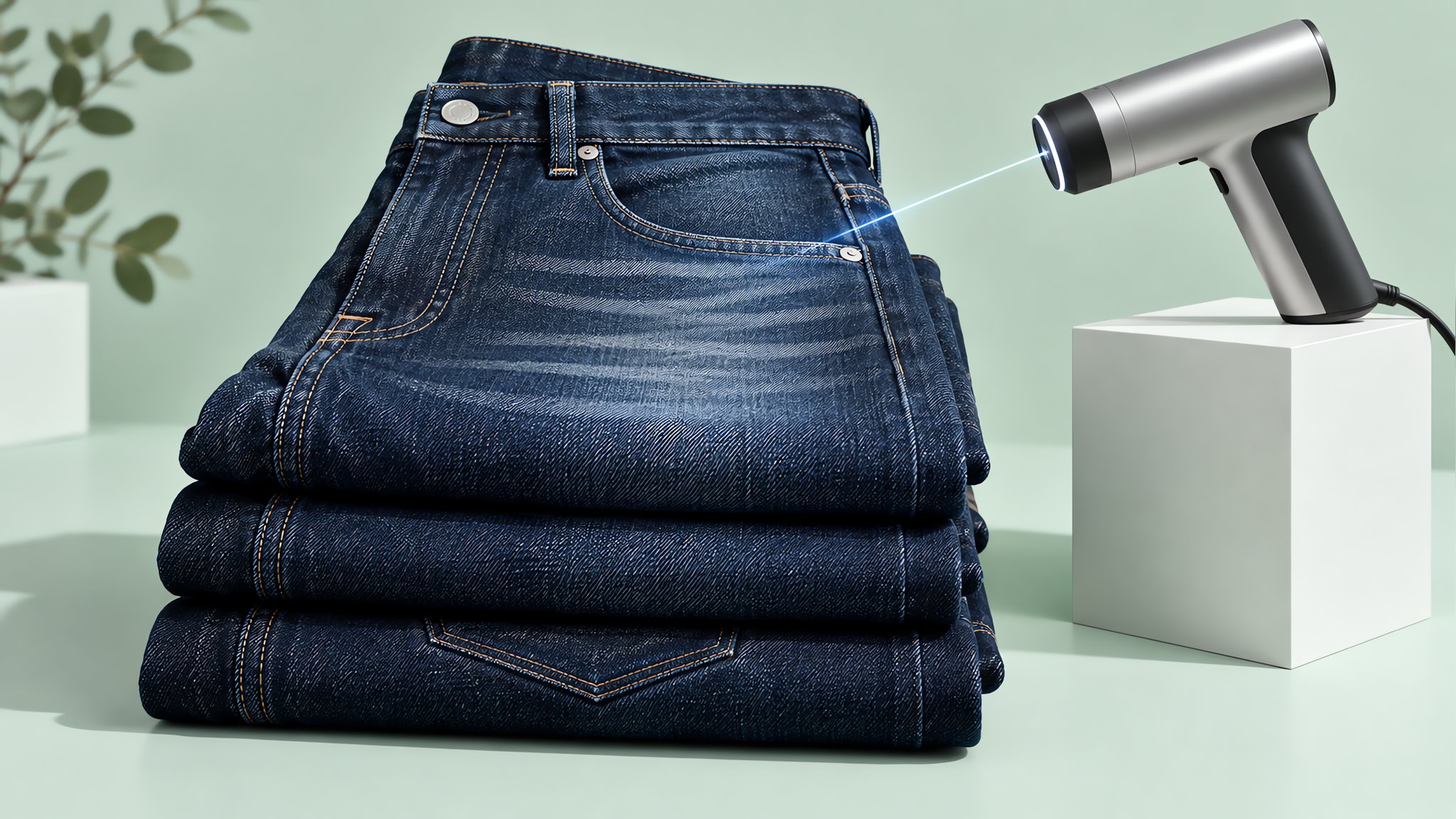
Laser denim finishing uses computer-controlled lasers to etch patterns, create whiskering, and produce fading effects directly on the fabric surface. Instead of physically abrading the denim with pumice stones or sandblasting (which poses serious health risks), a laser beam vaporizes a thin layer of indigo dye in precise patterns. This process is completely dry—no water is used at all for the fading step. It also eliminates the need for potassium permanganate spray, a common chemical oxidizer used in traditional distressing.
Because lasers are digitally controlled, they offer unmatched precision and repeatability. A design created on a computer can be applied to thousands of jeans with zero variation, reducing waste from defective finishes. The technology also allows for rapid prototyping, meaning brands can test new styles without running full production batches that consume resources.
Ozone washing is a wet process that dramatically reduces water and chemical usage compared to conventional bleaching. Ozone (O₃) is a powerful oxidizing agent that can lighten denim and remove indigo dye without the need for chlorine bleach or other harsh chemicals. In an ozone washing machine, ozone gas is dissolved into water, where it reacts with the dye, breaking it down into colorless compounds. The water can then be filtered and reused multiple times, drastically cutting overall consumption.
According to Eco-Stylist’s guide to sustainable jean production, ozone washing can reduce water use by up to 50% compared to traditional bleaching methods, and it eliminates the need for toxic chemicals like sodium hypochlorite. Because ozone decomposes back into oxygen after use, it leaves no harmful residues in the wastewater, making it a much safer alternative for both workers and the environment.
The most sustainable denim finishing often combines laser and ozone technologies in a single production line. Laser handles the dry, high-precision distressing effects that would otherwise require manual scraping or sandblasting. Ozone then takes care of the overall lightening and softening that would traditionally require bleach and heavy washing. Together, they can reduce water consumption by up to 90% compared to conventional finishing, as noted in our detailed analysis of laser and ozone water savings. This combination also cuts chemical use by up to 80%, since neither process relies on the harsh oxidizers and abrasives of traditional methods.
Beyond the direct savings, these technologies reduce energy consumption. Traditional stone washing requires large machines tumbling heavy stones, which consumes significant electricity. Laser machines, while energy-intensive during operation, complete a pair of jeans in seconds rather than minutes, leading to net energy savings per unit. Ozone washing operates at lower temperatures than conventional bleaching, further reducing energy demand.
The shift to laser and ozone finishing has profound implications for worker health and safety. Sandblasting, once common for creating distressed looks, releases silica dust that causes silicosis—a deadly lung disease. Laser finishing eliminates this hazard entirely. Similarly, potassium permanganate spray, used to create fade effects, is a strong oxidizer that can cause skin burns and respiratory problems. Ozone washing replaces these chemicals with a process that is safe when properly contained, as ozone gas is harmful if inhaled in high concentrations but is managed in closed systems.
From a supply chain perspective, laser and ozone technologies enable greater transparency and control. Because the processes are digitally driven, brands can track exactly how much water, energy, and chemicals are used per garment. This data supports sustainability claims and helps identify further efficiencies. Experts emphasize that sustainability in denim involves everything from water use to labor practices, and these technologies address multiple fronts simultaneously.
A common misconception is that sustainable finishing compromises the look and feel of denim. In reality, laser and ozone technologies often produce superior results. Laser fading can create incredibly detailed patterns—from subtle whiskering to intricate graphics—that would be impossible or prohibitively expensive with manual methods. The precision of laser also means less fabric damage, resulting in jeans that last longer. Ozone washing yields a softer hand feel than harsh bleaching, and because it doesn’t weaken cotton fibers as much, the denim retains its strength and durability.
For consumers who value authenticity, these technologies can replicate vintage fades with remarkable accuracy. Designers can scan a pair of well-worn vintage jeans and recreate the exact fading pattern on new denim using laser programming. This preserves the aesthetic heritage of denim while eliminating the environmental toll of achieving that look through repeated washing and wear.
When shopping for jeans made with laser and ozone finishing, keep these tips in mind to ensure you’re getting genuinely sustainable products:
Even with good intentions, shoppers can fall into traps when seeking sustainable denim. Avoid these common mistakes:
Laser and ozone denim washing represent a significant leap forward in sustainable fashion. By replacing water-intensive and chemical-heavy finishing methods with precision digital tools and safe oxidation processes, these technologies cut water use by up to 90% and chemical use by up to 80% without compromising quality or style. They also protect workers from hazardous conditions and reduce pollution in manufacturing communities.
For consumers, the takeaway is clear: you don’t have to sacrifice your love of denim to be environmentally responsible. By choosing jeans finished with laser and ozone technology, you support a cleaner, safer industry. Pair that choice with mindful care—washing less, using cold water, and repairing instead of replacing—and your denim habit becomes part of the solution rather than the problem. Explore our collection of eco-friendly jeans to see these technologies in action.
Laser and ozone finishing can reduce water consumption by up to 90% compared to conventional denim washing. Laser fading is completely dry, while ozone washing uses water that can be recycled and requires less overall volume than traditional bleaching.
No, these technologies often produce superior results. Laser allows for precise, detailed fading patterns without damaging fabric, while ozone creates a soft hand feel and preserves fiber strength better than harsh bleaching.
Ozone is safe when used in properly sealed industrial systems with adequate ventilation and monitoring. It eliminates the need for hazardous chemicals like chlorine bleach and potassium permanganate, improving worker safety overall.
Look for explicit mentions in product descriptions, such as ‘laser-finished’ or ‘ozone-washed.’ Reputable brands will also provide water savings data or certifications like OEKO-TEX or bluesign that cover finishing processes.
