



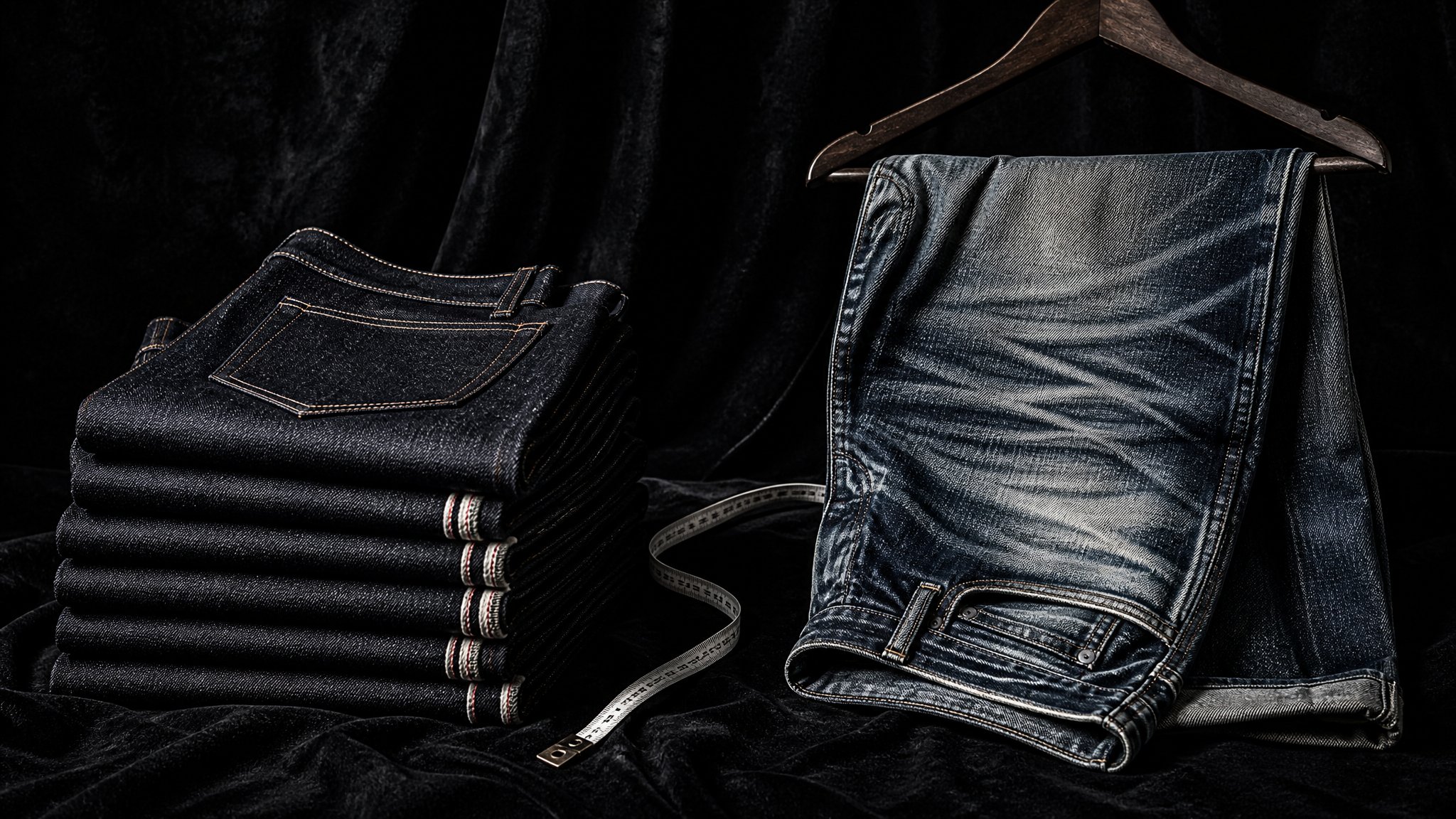
Choosing between raw and washed denim is one of the first decisions you’ll face when shopping for jeans. Each type offers a distinct look, feel, and care routine, and understanding the differences helps you find a pair that truly fits your lifestyle. Whether you are drawn to the crisp, deep-indigo character of raw denim or the ready-to-wear softness of washed denim, this guide will explain everything you need to know—from fabric construction to long-term fading and sustainability. By the end, you’ll be confident in selecting the perfect denim for your wardrobe. And if you are exploring sustainable jeans, knowing these key differences will also help you make an eco-conscious choice.
Raw denim, sometimes called dry or unwashed denim, is fabric that has not been washed or treated after the dyeing and weaving process. As noted in a comprehensive denim fabric guide by ClothingDigest, raw denim retains the natural stiffness and deep indigo color from the dye bath. Because it hasn’t undergone any industrial washing or softening, raw denim is rigid and will gradually mold to your body over time. The indigo also fades uniquely based on how you wear and move, creating personalized whiskers, honeycombs, and stacks. Enthusiasts often prize raw denim for its durability and the storytelling aspect of its wear pattern.
Washed denim refers to denim that has undergone one or more wet processes—such as stone washing, enzyme washing, or rinse cycles—to remove excess indigo, soften the fabric, and produce a specific look. According to Apex Fashion Lab’s denim glossary, these treatments can create faded, distressed, or uniformly lightened appearances. Washed denim is typically more comfortable right out of the store because the fibers have already been relaxed. The fading is mostly predetermined, so you get a consistent look without the extended break-in period of raw denim.
Indigo dye is central to both raw and washed denim. Raw denim often features multiple dye dips that result in a deep, rich blue with minimal surface fading. In contrast, washed denim has had some indigo intentionally removed. Fabric weight, measured in ounces per square yard (oz), also varies. While weight can range from lightweight (10 oz) to heavyweight (16 oz and above), as an article on denim selection by SkyKingdom explains, weight alone doesn’t determine feel—yarn count, weave, and spinning method (e.g., ring-spun vs. open-end) are equally important. Both raw and washed denim can be produced in various weights, so choose based on your climate and desired drape.
Washed denim wins hands-down for immediate comfort. Because the fabric has already been relaxed during washing, the denim feels soft and pliable. You can wear a pair of washed jeans all day without stiffness. In contrast, raw denim is initially rigid and may feel restrictive. However, as you wear raw denim consistently, it gradually conforms to your body shape, developing a custom fit that many find rewarding. The break-in period typically ranges from a few weeks to a few months, depending on how often you wear them. If you value instant comfort, go with washed denim. If you enjoy a personalized fit and are patient with break-in, raw denim is your choice.
Because raw denim hasn’t undergone the stress of industrial washing, the cotton fibers remain stronger and less abraded. This generally makes raw denim more durable over time. The ClothingDigest guide notes that the integrity of denim depends on the quality of the yarn and weave, but raw denim avoids the weakening effects of washing treatments. Washed denim, especially heavily stone-washed or acid-washed varieties, can have reduced tensile strength due to the abrasive process. However, modern sustainable washing methods—like the laser and ozone technology used by SIFIRbir—can achieve a soft hand without compromising fiber strength as much. For longevity, raw denim generally offers more wear, but a well-made washed pair with gentle processing can also last many years.
The most obvious visual difference is in how the jeans look when new and how they change. Raw denim starts dark and uniform, with a matte surface that can appear almost dusty. As you wear and periodically wash raw jeans, the indigo gradually fades where creases and friction occur, creating unique high-contrast patterns. Washed denim comes pre-faded, with soft, low-contrast fades that are already established. Some washed jeans mimic natural wear, while others have deliberate whiskering or sanding applied. If you love evolving your jeans and creating a one-of-a-kind look, raw denim is ideal. If you prefer a finished aesthetic from day one and don’t want to worry about uneven fading, washed denim is more convenient.
Sustainability is a complex factor in the raw vs washed debate. Raw denim often requires fewer resources during production because it skips the washing steps, which can save water, energy, and chemicals. However, raw denim’s longer break-in period may lead some people to discard jeans before they are fully worn in. On the other hand, washed denim traditionally uses large amounts of water and chemical treatments, but many modern brands—including SIFIRbir—use eco-friendly methods like laser fading and ozone bleaching to drastically reduce environmental impact. Washing at home also matters; raw denim owners typically wash less frequently, conserving water. Ultimately, the most sustainable choice is the pair you will wear for years. For a deeper dive into responsible choices, check out our Sustainable Denim Buying Guide.
Raw and washed denim each have distinct advantages. Raw denim offers a personalized fade journey, superior durability, and often a smaller environmental footprint during production, but demands patience and a different care philosophy. Washed denim provides immediate comfort, a predictable look, and can be eco-friendly when produced with advanced technologies like laser and ozone. The best choice depends on your priorities: do you want your jeans to evolve with you, or do you prefer a ready-to-wear garment with a consistent style? Either way, purchasing from a brand committed to sustainability ensures your denim has a lower impact. Explore our latest new releases to find ethically made jeans that match your preference. Remember, the most sustainable pair is the one you love and wear for years.
Yes, raw denim is typically worn without washing for the first few months to allow natural fading to develop. Spot cleaning and airing are recommended instead of washing.
Not necessarily. While aggressive washing processes can weaken fibers, modern eco-friendly techniques (like laser and ozone) soften denim without reducing strength. High-quality washed denim can be just as durable.
Check the label. Raw denim is often labeled ‘unwashed’ or ‘dry’ and feels stiff. Washed denim will feel soft and may show pre-existing fading or whiskering. When in doubt, ask the retailer about processing.
It depends on production methods. Raw denim uses less water and fewer chemicals during manufacturing, but its longer break-in might lead to disposal. Washed denim can be sustainable if produced with water-saving technologies. Choose a brand with transparent eco-claims.
