




Water scarcity is one of the most pressing environmental challenges of our time, and the fashion industry has long been a major contributor. Conventional denim finishing — the process of giving jeans their worn-in look — traditionally relies on water-intensive techniques like stone washing, bleaching, and chemical rinses. However, a revolutionary approach is changing the game: denim laser technology. In this comprehensive guide, we explain how laser finishing works, why it dramatically reduces water consumption, and how you as a shopper can support this innovation. By the end, you will understand why laser‑finished denim is a cornerstone of eco‑friendly fashion and how to spot it when shopping.
To appreciate the impact of laser technology, you first need to know how most jeans are made today. After the denim is woven and sewn, the garment undergoes a series of wet processes to achieve the desired color, softness, and distressed effects. A recent AP News report on sustainable denim highlights that many brands market their jeans as “sustainable,” but the reality is often complicated. For decades, the industry has relied on stone washing (tumbling jeans with pumice stones in water), enzyme washes, and bleach rinses — each requiring vast quantities of water and releasing chemical‑laden effluent into the environment. A single pair of conventional jeans can consume over 3,700 litres of water across its lifecycle, with finishing accounting for a significant share.
In contrast, denim laser technology uses concentrated beams of light to remove indigo dye from the fabric surface with pinpoint precision. The process is completely dry — no water is needed to create fading, whiskering, or abrasion effects. As Vogue Arabia’s guide to sustainable denim points out, low‑water manufacturing techniques are a key factor for eco‑conscious shoppers. Laser finishing is one of the most effective low‑water innovations, and it also eliminates the need for harsh chemicals like potassium permanganate, which are commonly used in manual distressing. The result is a cleaner, safer production process that drastically cuts water use and toxic waste.
Laser technology is often paired with ozone washing, another water‑saving method. Ozone gas acts as a bleaching agent in a closed‑loop system, further reducing the need for water rinses. Our internal article on how laser and ozone washing cuts water waste in denim dives deeper into this synergy and explains why forward‑thinking brands are adopting both technologies to produce jeans that look great while conserving resources.
A denim laser machine uses a high‑resolution laser head mounted on a gantry. The operator loads a digital design file (e.g., a pattern of whiskers or a faded area) into the computer. The laser beam scans the jeans’ fabric, vaporising the indigo dye layer in the dictated areas. The depth of the beam can be controlled to create subtle to heavy wear without damaging the cotton fibres. A single pair can be finished in seconds to minutes, depending on the complexity. Importantly, no water is used at any stage.
The most obvious benefit is water conservation — a laser‑finished pair requires up to 90% less water than conventional stone‑washed denim. But the advantages extend further. First, there is a sharp reduction in chemical usage: no chlorine bleach, no potassium permanganate sprays. Second, the process is energy‑efficient because it eliminates the need for large washing machines and drying drums. Third, reproducibility is highly accurate: consistent fading patterns can be reproduced across thousands of pairs, reducing waste from mismatched finishes. As The Good Trade’s review of ethical denim brands notes, eco‑materials like organic cotton are important, but the manufacturing process itself — including finishing — determines a garment’s true environmental footprint.
Traditional stone washing uses pumice stones and water to abrade the fabric, generating large volumes of rock sludge and wastewater. Enzyme washes employ biological catalysts to soften the denim, but still require hot water baths and multiple rinses. Laser finishing, combined with ozone gas, can achieve the same or better aesthetics with a fraction of the resource input. This is why many innovative denim manufacturers have invested heavily in laser systems. Our dedicated page on how laser finishing cuts water use in denim production provides a technical deep dive for those who want to understand the engineering behind the shift.
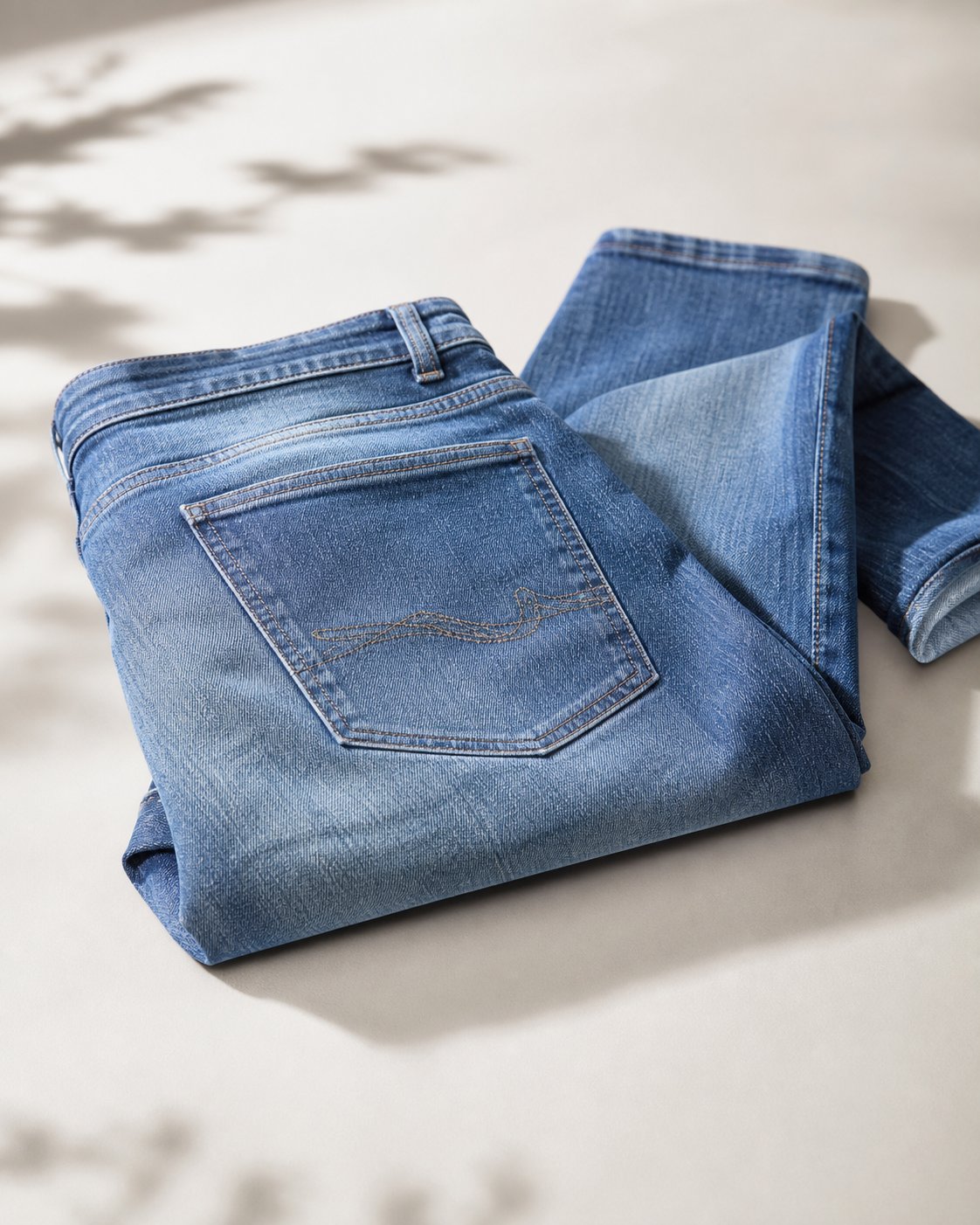
Denim laser technology represents a paradigm shift in how jeans can be made. By replacing water‑ and chemical‑heavy finishing steps with a dry, precise beam of light, it slashes water consumption, reduces toxic effluent, and enables consistent high‑quality results. For shoppers who care about the planet, choosing laser‑finished denim is one of the most tangible actions you can take to lower your wardrobe’s water footprint.
To stay updated on the latest sustainable denim innovations, check out the Best Eco Denim Releases for 2026. Remember that every purchase is a vote for the kind of future you want to see. By supporting brands that embrace water‑saving technologies, you help drive the industry toward a cleaner, more responsible tomorrow.
No. Laser technology removes only the surface dye, leaving the cotton fibres intact. The jeans feel soft and look beautifully faded, but the fabric strength is unchanged. In fact, because no harsh chemicals are used, the denim may last longer than conventionally treated pairs.
While exact figures vary by design and manufacturer, laser finishing typically reduces water consumption by 80–90% for the fading and distressing stages. When combined with ozone washing, the savings can be even greater. This makes it one of the most effective water‑saving technologies available for denim production.
Yes. Laser‑finished jeans require no special care. To extend their life and minimise environmental impact, wash them infrequently (every 5–10 wears), inside out in cold water, and air‑dry them. This preserves both the colour and the planet.
Laser machines require significant upfront investment and technical expertise. Smaller manufacturers may struggle with the cost, and some legacy brands are slow to shift from established wet‑process lines. However, as demand for sustainable denim grows, more producers are transitioning to laser and ozone finishing.
