



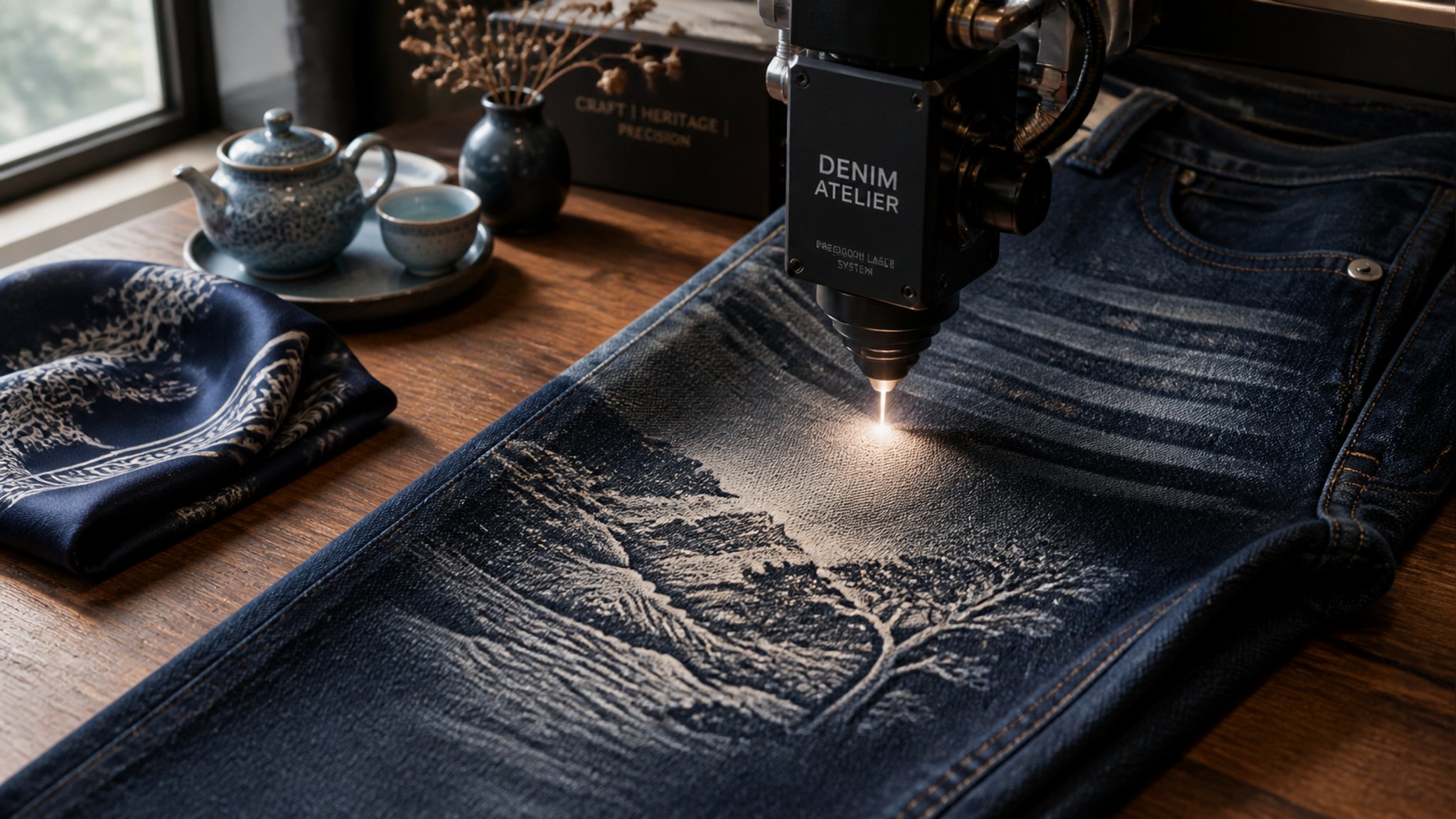
Denim has a dirty secret: the worn-in, faded look you love often comes at a steep environmental cost. Traditional distressing methods like stone washing and sandblasting consume enormous amounts of water, energy, and harmful chemicals. But a cleaner alternative is reshaping the industry. Laser fading denim uses computer-controlled beams to create authentic wear patterns without a single drop of water. In this guide, you’ll learn exactly how the technology works, why it’s better for the planet, and what to look for when shopping for sustainably distressed jeans.
Whether you’re a denim enthusiast or simply want to make more responsible fashion choices, understanding laser fading empowers you to spot genuinely eco-friendly products. We’ll break down the science, compare it to conventional methods, and offer practical tips for identifying quality laser-finished denim.
Distressing is the process of artificially aging denim to create fades, whiskers, rips, and worn patches. For decades, this was done mechanically—by tumbling jeans with pumice stones (stone washing) or blasting them with sand (sandblasting). While effective, these methods are water-intensive and often hazardous. Stone washing can use up to 50 liters of water per pair of jeans, and sandblasting exposes workers to silica dust, causing serious lung disease.
Laser fading emerged as a high-tech solution. Instead of physical abrasion, a focused laser beam vaporizes indigo dye from the fabric surface. The result is a precise, repeatable fade that mimics natural wear—without water, stones, or sand. This shift is part of a broader move toward sustainable denim production, as highlighted by industry analyses on net-zero materials transition in denim.
To appreciate laser fading, it helps to understand the baseline. Conventional denim finishing is one of the most polluting stages in garment production. Stone washing requires huge volumes of water, which becomes contaminated with dye and pumice sludge. Chemical bleaching uses chlorine or potassium permanganate, generating toxic wastewater. Sandblasting, now banned in many countries, posed severe health risks to workers.
In contrast, laser technology eliminates water and chemicals from the distressing step entirely. According to a critical review on sustainability in denim, laser fading is among the most environmentally friendly finishing methods available today, alongside ozone fading and enzyme treatments.
Laser fading relies on a high-powered, computer-guided laser that scans across the denim surface. The laser’s energy is absorbed by the indigo dye, causing it to sublimate—turn directly from solid to gas—without damaging the underlying cotton fibers. By controlling the laser’s intensity, speed, and pattern, manufacturers can create everything from subtle whiskers to aggressive distressed patches.
The process begins with a digital design. Designers map out the desired fade pattern using specialized software, often based on scans of naturally worn jeans. The laser then reproduces that pattern with micron-level precision. This repeatability is a game-changer: brands can produce identical fades across thousands of pairs, ensuring consistency that hand-sanding or stone washing could never achieve.
Because the laser only affects the dye, the fabric’s strength and integrity remain intact. This contrasts with stone washing, which physically abrades the fibers, weakening the denim over time. The result is a fade that looks authentic but lasts longer.
Water usage is the most obvious difference. Stone washing requires continuous water flow to rinse away pumice and dye particles—often 30-50 liters per pair. Laser fading uses zero water. Energy consumption is also lower: while lasers require electricity, they eliminate the need for large washing machines, dryers, and water heating. Chemical use drops to nearly zero, as there’s no need for bleaching agents or softeners.
Worker safety improves dramatically. Laser operators work in enclosed, ventilated booths, protected from fumes and particulates. No one handles stones, sand, or toxic chemicals. This aligns with the findings of a report on sustainable denim transformation, which notes that laser technology protects workers from hazardous manual processes.
Quality-wise, laser fading offers unmatched precision. Fades can be placed exactly where natural wear occurs—thighs, knees, seat—without over-distressing. Stone washing is more random, often resulting in uneven or excessive abrasion. Laser-faded jeans also tend to have a softer hand feel because the fabric isn’t beaten by stones.
While laser handles the fading, ozone technology addresses the washing and softening steps. Ozone (O₃) is a powerful oxidizing agent that can clean and bleach denim without water. In an ozone wash, garments are placed in a sealed chamber where ozone gas breaks down indigo dye and removes impurities. This process uses up to 90% less water than conventional washing and requires no heat, saving energy.
When combined, laser and ozone form a nearly waterless finishing system. The laser creates the design, and ozone cleans and softens the fabric. Some brands also use e-flow technology, which uses nano-bubbles of air and a tiny amount of water to achieve softness. Together, these innovations can reduce water consumption in denim finishing by over 90% compared to traditional methods—a figure supported by industry case studies on water-saving wash technologies.
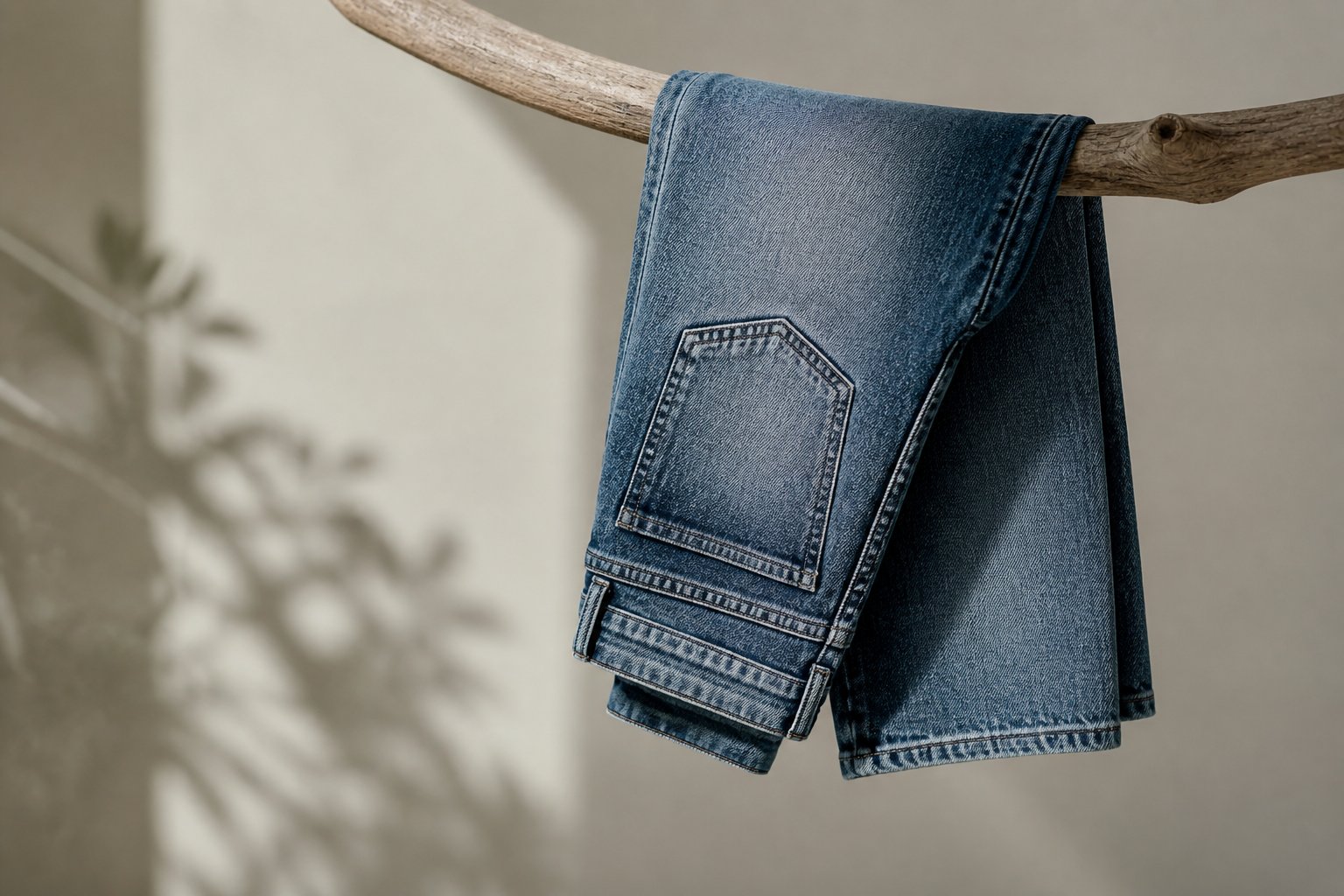
Laser fading denim represents a significant leap forward in sustainable fashion. By replacing water-intensive stone washing and hazardous sandblasting with precise, computer-controlled lasers, the industry can dramatically reduce its environmental footprint while improving worker safety and product quality. When combined with ozone washing, the result is a nearly waterless finishing process that still delivers the authentic, worn-in look consumers love.
The key takeaways are clear: laser fading uses zero water and minimal chemicals, produces consistent and durable fades, and protects workers from dangerous conditions. As a consumer, you can support this technology by choosing brands that are transparent about their finishing methods and by caring for your jeans responsibly. For more insights, explore our article on how laser fading saves water vs. stone washing or browse our sustainable jeans collection.
No. Laser fading targets only the indigo dye on the surface, vaporizing it without cutting or weakening the cotton fibers. The fabric remains intact and often feels softer than stone-washed denim.
Laser fading uses zero water for the distressing step. Stone washing can use 30-50 liters per pair. When combined with ozone washing, total water savings can exceed 90% compared to conventional finishing.
Yes. Designers can program any pattern, from subtle whiskers to heavy distressing. The laser reproduces the design with high precision, allowing for consistent results across large production runs.
The technology requires upfront investment, but it reduces water, energy, and chemical costs. Prices vary by brand, but many laser-faded jeans are competitively priced with premium stone-washed options.
